Water Heater Maintenance: Extend the Life of Your Unit
Is your water heater quietly working overtime, tucked away in a closet or basement corner? Most days, it goes unnoticed—until that icy morning when it suddenly stops. At Peters Flo Plumbing, we know small steps can spare you big headaches.
With a few routine maintenance habits, you can keep your water heater running smoother, longer, and safer. Let's break down what you need to know, whether you're a seasoned DIYer or just want peace of mind.
Why Maintenance Matters 🚿
Think of your water heater like the heart of your home's plumbing. It quietly powers countless showers, dishes, and laundry loads. But, like any hard-working appliance, it needs care.
- Sediment builds up over time, causing inefficiency and loud rumbling sounds.
- Small leaks can quietly waste water and energy.
- Neglect can lead to rusted tanks, failed heating elements, or even costly water damage.
Regular maintenance doesn’t just save money on repairs—it keeps your hot water reliable and your family comfortable. According to the U.S. Department of Energy, annual water heater checks can cut energy use and extend your unit’s lifespan.
Quick Safety Checklist
Before you get started, safety first:
- Turn off the power. For electric heaters, flip the breaker. For gas, set the dial to “pilot.”
- Let the water cool. Hot water can scald. Wait a couple of hours after last use.
- Know your shutoff valves. In case of leaks or emergencies, you need to act fast.
If you notice any gas smell, corrosion, or water pooling, don’t risk it. Call a professional immediately.
Key Maintenance Tasks
Routine attention can mean the difference between a minor tune-up and a major disaster. Here’s what matters most:
1. Flush the Tank
Sediment is the silent killer of water heaters. Minerals in city water settle at the bottom, creating insulation between the burner and water. This forces your heater to work harder and can even cause it to overheat.
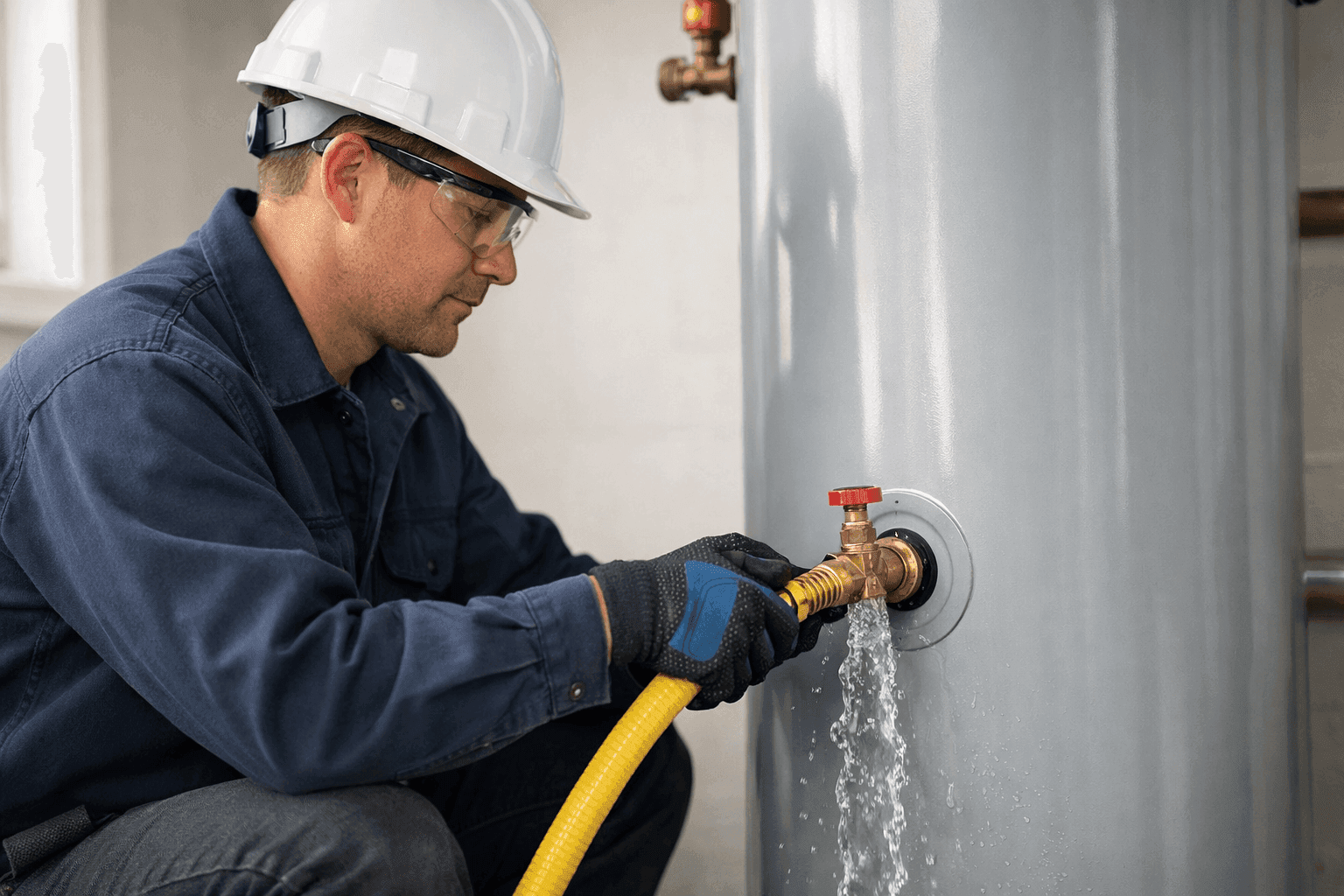
- Attach a garden hose to the drain valve.
- Turn off power and let the water cool.
- Open the drain and flush until the water runs clear.
The process takes about 20 minutes. Once a year is enough for most homes, but if you have hard water, consider twice a year.
2. Check the Anode Rod
The anode rod prevents rust by attracting corrosive elements. Think of it as a sacrificial protector. Over time, it wears down.
- Locate the rod on top of the heater.
- Unscrew and inspect—replace it if it’s less than half an inch thick or coated with calcium.
A healthy anode rod can double the life of your tank.
3. Inspect Connections and Valves
Leaks often start small. Take a flashlight and check:
- All visible pipe connections for drips or rust
- The pressure relief valve (lift the lever briefly; water should flow and stop when released)
- Gas lines for any sign of wear or gas odor
If you spot trouble, it’s time to call a licensed plumber.
4. Test the Temperature
A too-hot heater wastes energy and can scald. The U.S. Consumer Product Safety Commission recommends 120°F (49°C).
- Set the thermostat to 120°F if it’s higher.
- Use a kitchen thermometer to confirm at the tap.
Lowering the temperature just 10 degrees can save up to 5% on energy bills.
Warning Signs of Trouble 🔧
Sometimes your water heater sends signals that shouldn’t be ignored. Watch for:
- Water around the base of the tank
- Popping or rumbling noises
- Rusty or discolored hot water
- Inconsistent hot water or sudden temperature changes
These are red flags. Address them early to avoid major repairs, water damage, or losing hot water entirely.
DIY vs. Calling a Pro
Some tasks are safe for handy homeowners—like flushing the tank or adjusting the thermostat. But if you notice:
- Persistent leaks
- Pilot light won’t stay lit
- Smell of gas
- Electrical issues (burnt wiring, tripped breakers)
It’s time for a pro. Licensed plumbers have the tools—and the experience—to safely handle repairs, code compliance, and gas line work. Learn more about our Backflow Prevention.
What the Pros Do on Arrival
A professional plumber checks more than just the basics:
- Full inspection of all valves, lines, and connections
- Code and safety compliance review (including venting and gas lines)
- Internal tank and burner diagnostics
- Water pressure and flow analysis
They’ll also help you spot related issues with pipes, fixtures, and even recommend upgrades if your heater is nearing the end of its useful life.
Prevention & Maintenance: The Long Game
Routine care can add years to your water heater’s life. Make it part of your seasonal home checklist:
- Flush the tank every 6–12 months
- Inspect the anode rod annually
- Check for leaks and drips during spring and fall
- Test the temperature and pressure relief valve
Set a calendar reminder, or schedule annual service with Peters Flo Plumbing for peace of mind.
Costs & Time Factors
Most routine maintenance takes under an hour. Parts like anode rods or pressure relief valves are affordable and widely available. Ignoring maintenance, however, can mean a surprise bill for a new unit—or worse, water cleanup and property repairs.
Regular tune-ups can prevent:
- Emergency calls (and their higher costs)
- Premature replacements
- Increased utility bills from inefficiency
When It’s an Emergency
No hot water on a winter morning? Water gushing from the tank? These are emergencies.
- Shut off water supply immediately.
- For gas heaters, turn off the gas line.
- Call Peters Flo Plumbing for fast help.
If you’re in the area, ask about our plumbing services in Altamonte Springs for rapid, reliable support.
Seasonal Considerations ❄️
Extreme temperatures can stress your water heater. In winter, insulate pipes and the tank (if permitted by the manufacturer). Before summer vacations, turn down the thermostat or set the unit to “vacation mode.”
If you leave for extended periods, consider shutting off the water and power supply as a precaution.
Common Mistakes to Avoid
- Skipping annual flushes—sediment will build up, guaranteed.
- Ignoring small leaks—they rarely fix themselves.
- Setting the temperature too high—risks scalding and wears out the tank.
- DIY repairs on gas lines or electrical—leave these to the pros.
Timeline & Disruption
With proper maintenance, most water heaters last 8–12 years. Some gas models stretch even longer. When you do need a replacement, expect about half a day for installation, including removing the old tank and hooking up new lines and connections.
Plan ahead if your heater is approaching a decade old.
Materials & Equipment
A few simple tools go a long way:
- Garden hose (for draining)
- Socket wrench (for anode rod)
- Flashlight (for inspections)
- Towel or bucket (for spills)
- Kitchen thermometer
For serious repairs, specialized tools and knowledge are required. That’s where professional plumbing services shine.
When to Replace
No heater lasts forever. Signs it’s time for a new unit:
- Age: Over 10–12 years old
- Multiple repairs in a short span
- Rust in water (especially from the hot tap)
- Leaking tank (not just fittings)
- Energy bills creeping up
Newer models are more efficient and safer. If you’re unsure, a plumber can advise if a repair is worth it—or if it’s time to upgrade.
FAQ: Your Water Heater Questions
How often should I flush my tank?
Once a year for most homes; twice in areas with hard water.
What if my water smells like rotten eggs?
This can indicate bacteria in the tank—call a plumber for inspection.
Is tankless better?
Tankless units save space and energy, but aren’t ideal for every home. Ask for an assessment based on your usage.
Are there regulations I should know?
Yes! Local codes (and the International Plumbing Code) set standards for safety, venting, and installation. Always check with professionals.
Keep Your Water Heater Running Strong
A little TLC goes a long way for your water heater—and your peace of mind. When in doubt, call in the professionals at Peters Flo Plumbing. We’re here to keep your water hot, your mornings comfortable, and your home protected.
Call Peters Flo Plumbing now — or reach us anytime at 877-331-9687 .