Troubleshooting Low Water Pressure at Home
Low water pressure can sneak up on you. One day, your shower is a waterfall. The next, it’s barely a trickle. Dishes pile up, laundry drags out, and little daily annoyances start to add up. If you’ve ever stood under a dribbling showerhead, you know how frustrating it feels.
At Peters Flo Plumbing, we know that water pressure problems aren’t just inconvenient—they’re a sign that something’s off in your home’s plumbing. Let’s break down why it happens, what you can do, and when it’s time to bring in professional help.
Common Causes of Low Water Pressure 🛠️
Like a mystery novel, low water pressure has more than one culprit. Some are simple, some sneakier. Here are the usual suspects:
- Clogged Pipes: Mineral buildup, rust, or debris inside your pipes can narrow the flow, much like plaque in an artery.
- Leaks: Even a pinhole leak can drop your water pressure. Water takes the easiest path—sometimes, that's straight out of a tiny crack.
- Faulty Fixtures: Aerators and showerheads can get blocked with sediment or scale.
- Pressure Regulator Issues: If you have a pressure-reducing valve (PRV), it could be stuck or broken.
- Neighborhood Supply Problems: Sometimes, it’s not just your house. City supply work, hydrant use, or municipal issues can cause temporary drops.
- Old, Corroded Pipes: Galvanized steel pipes, common in older homes, corrode from the inside out, restricting flow and leading to pressure loss.
- Shared Plumbing Lines: If everyone’s using water at once—think morning rush—pressure can dip.
Every home is unique, but these are the first places to check.
Quick Safety Checklist
Before poking around, safety first. Water and tools can be a tricky mix.
- Turn off the main water supply if you’re opening pipes.
- If you spot standing water or suspect a leak near electrical wires, stay clear and call a professional.
- Avoid using harsh chemicals to clear clogs—they can damage your pipes and harm your health.
DIY Troubleshooting Steps 🧰
Roll up your sleeves. Some pressure problems just need a little know-how.
1. Test Multiple Fixtures
Is the low pressure everywhere, or just in one spot? If it’s a single faucet or shower, the problem might be right at the fixture.
2. Clean Faucet Aerators and Showerheads
Unscrew aerators or showerheads and soak them in vinegar overnight. Scrub away any grit or deposits.
3. Check the Main Shutoff Valve
Sometimes the main valve isn’t fully open after repairs or inspections. Find it (usually near where the water line enters your home) and turn it counterclockwise to open it all the way.
4. Inspect the Pressure Reducing Valve
If your home has a PRV, it’s typically near the main shutoff. Look for signs of corrosion or leaks. If you’re comfortable, try adjusting it slightly and see if pressure improves.
5. Walk the House for Signs of Leaks
Listen for hissing, look for damp spots on walls, ceilings, or floors. Your water meter can help too: note the reading, avoid using water for two hours, and check again. If it moves, there’s a hidden leak.
6. Flush Your Pipes
Turn on all cold water taps in the house for a few minutes to help clear minor sediment. Start with the lowest tap (like a basement sink) and work upwards.
When to Call a Plumber
Not every problem has a quick fix. Here’s when to reach out to a licensed plumber:
- You’ve Tried the Basics: Still low pressure after the steps above? It’s time for a deeper look.
- Multiple Leaks or Wet Spots: Water damage can escalate quickly. Don’t wait.
- Sudden Drop in Pressure: If it happened overnight, it could signal a burst pipe or main supply issue.
- Old or Corroded Pipes: Homes built before the 1970s often have galvanized pipes that need replacement.
- Pressure Regulator Failure: These valves require specialized tools and know-how.
- Backflow Prevention Needed: Protecting your home from contamination is both smart and, in many locations, required by code.
Find reliable Water Pressure Issues and make sure your plumbing is up to the latest safety standards.
What Professional Plumbers Do On Arrival 🛎️
When Peters Flo Plumbing visits your home, here’s what happens:
- Thorough Inspection: We check all fixtures, valves, and visible piping for obvious problems.
- Leak Detection: Using advanced tools such as acoustic sensors or thermal cameras, we can pinpoint hidden leaks—often without tearing up your walls.
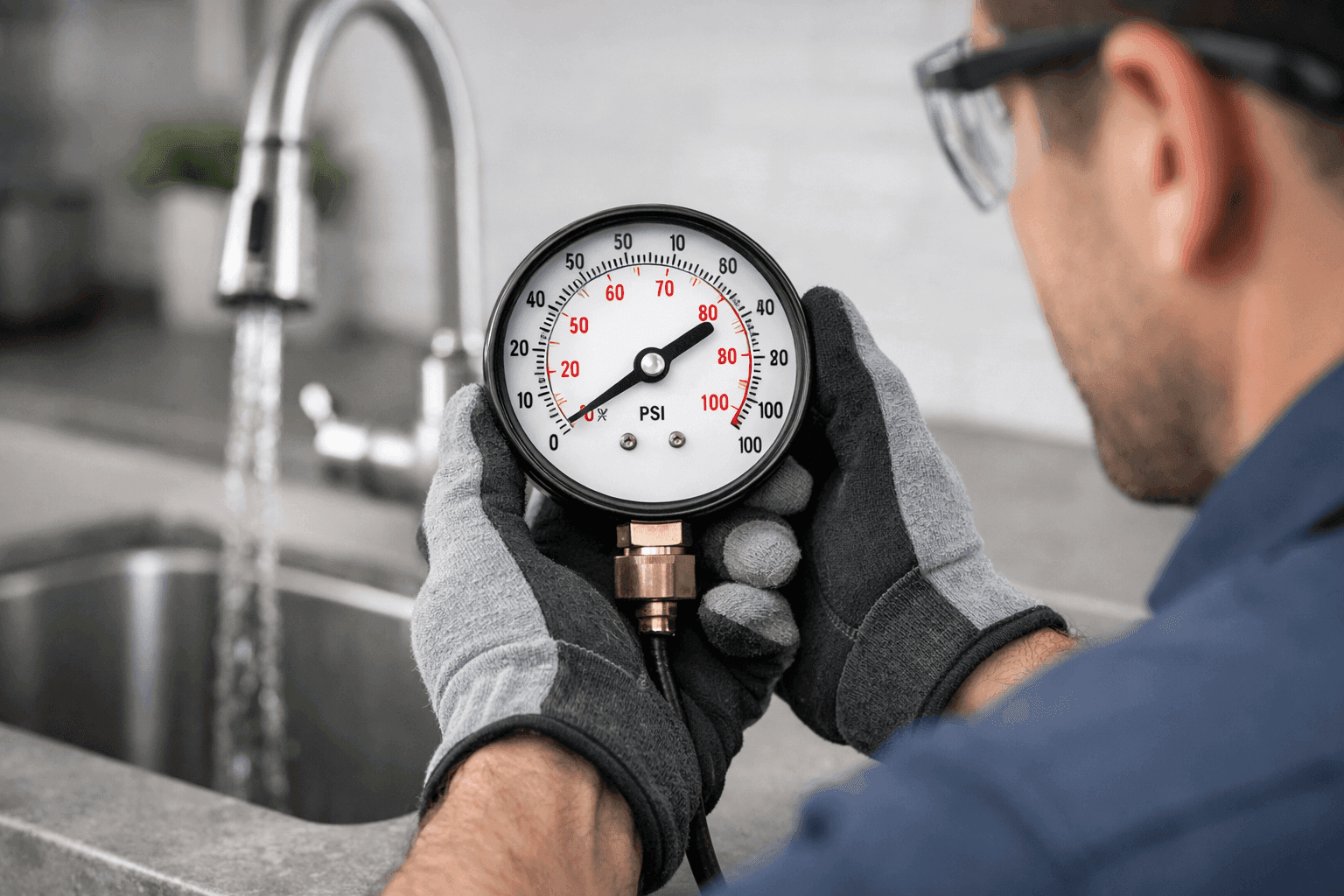
- Pressure Testing: We measure your home’s water pressure at various points to isolate the issue.
- Pipe Assessment: For older homes, we check for corrosion and blockages inside pipes.
- Recommendations: We’ll explain the issue in plain language—and help you understand your options for repair or replacement.
Preventing Future Problems 🏡
A few simple habits can keep your water flowing strong:
- Regular Maintenance: Annual plumbing check-ups help catch small issues before they become big ones. Pipes, valves, and fixtures all benefit from routine attention.
- Install Water Softeners: If your area has hard water, a softener can reduce mineral buildup.
- Replace Outdated Pipes: If your home still has galvanized steel or old copper pipes, modern alternatives like PEX or copper last longer and perform better.
- Monitor Water Pressure: Keep an inexpensive pressure gauge handy. Ideal residential pressure is usually between 40–60 psi.
- Use Strainer Screens: These inexpensive mesh screens on faucets and showerheads catch debris before it clogs your fixtures.
- Schedule Leak Detection every few years, especially if your home is over 25 years old.
Costs & Time Factors
Low water pressure fixes range from a five-minute DIY cleanout to a full repiping job. Cleaning aerators or checking shutoff valves—free or close to it. Replacing a pressure regulator or fixing a major leak? That’s more involved.
Every situation is different, but a licensed plumber can give you a clear estimate after inspection. Most pressure issues are solved in a single visit, but large repairs (like repiping) may take a few days.
When It’s an Emergency
Some pressure problems can’t wait:
- Water pouring from walls, floors, or ceilings
- No water at all to the entire house
- Sewage smell or water backing up into sinks or tubs
If you notice these signs, shut off your main water supply and call immediately. Emergency plumbing services can stop damage before it spreads.
Frequently Asked Questions
Why is my water pressure low in just one bathroom?
It’s usually a clogged aerator or a partially closed valve for that fixture. Sometimes, it’s a local leak.
Can I adjust my own pressure regulator?
You can, but it’s easy to damage the valve or set it outside safe limits. Residential codes (see local plumbing codes) recommend professional adjustment.
Will pipe replacement solve my pressure issues?
If your pipes are corroded or undersized, yes. New pipes restore full flow and improve water quality.
Is low pressure a health risk?
It can be. Low pressure can allow backflow, which may pull impurities into your water supply. (That’s why Backflow Prevention near you is so important.)
Seasonal Considerations
Pressure problems sometimes pop up in winter, when freezing temperatures can cause pipes to constrict or even burst. In summer, outdoor watering and city supply work can drop pressure. If your low pressure is seasonal, take note and mention it to your plumber.
Common Mistakes to Avoid
- Ignoring the problem—small leaks get bigger.
- Using harsh chemicals to clear pipes.
- Turning the pressure regulator too far.
- Attempting major repairs without the right tools or knowledge.
Signs of Bigger Trouble
Look for these red flags:
- Brown or rusty water
- Sudden wet spots on floors or walls
- Unexplained spikes in your water bill
- Gurgling fixtures or strange noises in pipes
These hint at leaks, pipe failure, or even sewer line issues. Quick action is key.
Timeline & Disruption
Most pressure fixes are quick—less than a day. Larger repairs like pipe replacement or sewer line work may take several days, but a good plumber will minimize disruption and keep you in the loop.
Materials & Equipment
Professional plumbers use:
- Pressure gauges and flow meters
- Acoustic leak detectors
- Camera inspection tools for sewer lines
- Pipe cutters and specialty wrenches
For homeowners: a basic wrench, screwdriver, and vinegar for cleaning are enough for minor fixes.
Get Plumbing Solutions—No Guesswork
Low water pressure shouldn’t slow you down. If simple fixes don’t work, Peters Flo Plumbing is here to help with clear answers and lasting repairs. And if you’re searching for a high-value plumber, check out our plumbing services in Issaquah—we’re ready to handle even the trickiest water pressure issues.
Call Peters Flo Plumbing now — or reach us anytime at 877-331-9687 .