How to Shut Off Your Home’s Water in an Emergency
Every homeowner dreads that heart-stopping moment—water gushing from under the sink, a pipe hissing in the basement, or the ceiling dripping in the middle of the night. When plumbing goes haywire, panic can set in fast. But knowing how to shut off your home’s water can mean the difference between a quick mop-up and thousands in repairs.
At Peters Flo Plumbing, we’ve seen it all. We know that quick action saves homes. Let’s arm you with the know-how to take charge in a plumbing emergency, before it turns into a household disaster.
Main Shutoff Valve: The Heart of Your Home’s Plumbing 🚰
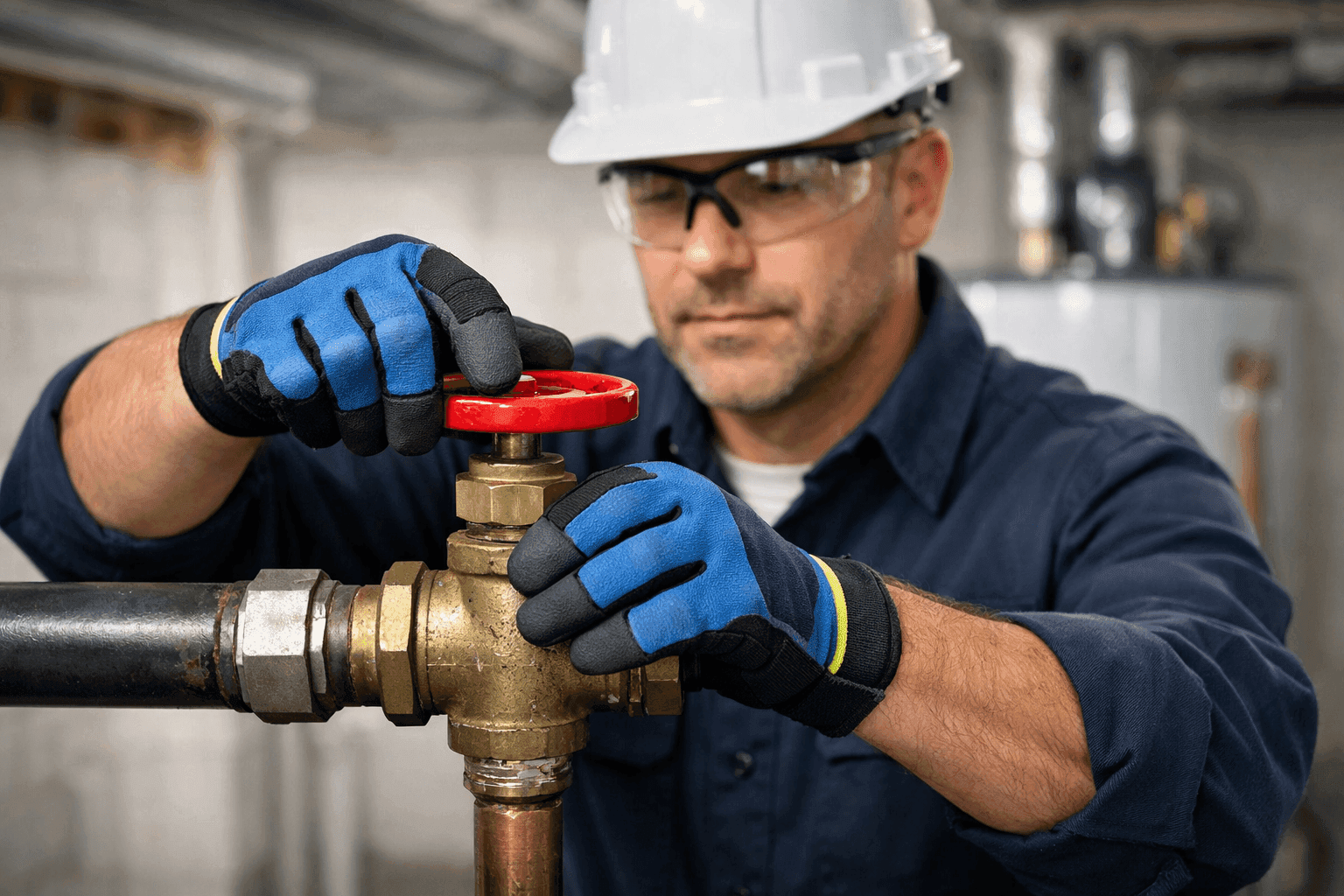
Think of the main shutoff valve as the master switch for your home’s water. It’s the gatekeeper—turning it off stops the flow into every pipe, fixture, and faucet. But where is it hiding?
- Most common locations:
- Basement, near the front foundation wall
- Crawl space, close to where the water line enters
- Utility room, near the water heater or furnace
- Exterior wall, in areas without basements
The valve itself is usually a round wheel (gate valve) or a straight-handled lever (ball valve). Turn the wheel clockwise (righty-tighty) to close. Lever handles? Rotate a quarter turn so it’s perpendicular to the pipe.
Tip: If you don’t know your main shutoff location, now’s the time to find it. Attach a tag or sticker for quick reference. Don’t wait for a crisis.
Fixture Valves: Stopping Water at the Source
Sometimes, shutting off water to the whole house is overkill. For small leaks—like a trickling toilet or a faucet gone rogue—look for fixture shutoff valves.
- Toilets: Typically, a small oval valve on the wall behind the toilet.
- Sinks: Under the cabinet, you’ll see two small valves (one for hot, one for cold).
- Washing machine: Usually behind the unit; twist to shut off both hot and cold supplies.
- Water heater: A shutoff at the top of the tank, for emergencies.
Twist these valves clockwise to stop water just to that fixture. Simple, fast, and effective.
Emergency Steps: What to Do When Every Second Counts
When water is pouring where it shouldn’t, stay calm and move with purpose. Here’s your action plan:
-
Stop the source:
- For whole-home leaks or major pipe breaks, head straight to the main shutoff.
- For localized leaks (toilet, sink, washing machine), close the fixture valve first.
-
Cut power if necessary:
- If water is near electrical outlets, flip the breaker for that area. Safety first.
-
Open faucets:
- This drains remaining water from pipes, relieving pressure and slowing leaks.
-
Contain the mess:
- Use towels, buckets, or pans to catch water.
-
Call a professional:
- For significant leaks or if you can’t find the shutoff, get help right away.
- Backflow Prevention can help avoid contaminated water entering your pipes during emergencies.
Resetting Water After an Emergency
Once the emergency is under control, you’ll want to get things flowing again. But do it right.
-
Check for repairs:
- Only turn water back on after leaks or bursts are fixed.
-
Open main valve slowly:
- Sudden pressure can shock pipes or loosen debris.
-
Bleed air from system:
- Open faucets (start with cold, then hot) throughout the house until water flows smoothly and air stops sputtering.
-
Inspect for new leaks:
- Watch for drips or damp spots as pressure returns.
Signs of Trouble: When to Shut Off the Water
Don’t gamble with time. Shut off water if you notice:
- Unexplained puddles or wet spots on floors or ceilings
- Pipes making loud banging or hissing noises
- Continuous running water sounds when all fixtures are off
- Sudden drop in water pressure
- Foul smells—could signal a sewer issue
If you spot any of these, act fast. The damage from waiting just a few minutes can multiply.
Quick Safety Checklist
- Know your main shutoff location
- Test valves every six months—stuck valves are useless in a crisis
- Keep a flashlight and wrench nearby
- Tag all main and key fixture valves for quick identification
Common Mistakes to Avoid
- Forgetting where the shutoff valve is: Find it before you need it.
- Using excessive force: If a valve is stuck, don’t break it. Call a professional.
- Not turning faucets back on after shutting off: This helps relieve pressure and drain lines.
- Ignoring small leaks: Even a drip can signal bigger trouble beneath the surface.
DIY vs. Call a Pro
Some plumbing fixes are DIY-friendly, but not all. If you can’t stop the leak, or if you see water near electrical systems or gas lines, call for help immediately. Emergency plumbing is no time for guesswork.
If you want reliable Backflow Prevention, or need help with pipe repairs, it’s best to bring in licensed professionals.
What Pros Do On Arrival
At Peters Flo Plumbing, we arrive ready. Here’s our process:
- Assess safety—electricity, gas, and water.
- Confirm the source—sometimes the obvious leak isn’t the only one.
- Perform a thorough inspection, including sewer line checks if needed.
- Advise on next steps—repairs, replacements, or upgrades.
- Restore water safely, testing for pressure and potential contamination.
We follow guidelines recommended by the International Association of Plumbing and Mechanical Officials (IAPMO) and local building codes to ensure your system is safe.
Prevention & Maintenance
Don’t wait for trouble to strike:
- Test your shutoff valve twice a year.
- Schedule annual plumbing check-ups.
- Install water alarms in flood-prone areas.
- Consider a whole-house backflow preventer for added protection.
If you’re in the New Orleans area and searching for a trusted plumbing company in New Orleans, our team is on standby to help with emergencies and routine care.
Costs & Time Factors
Shutting off your water is free. But repairs? They can add up quickly if leaks go unchecked. Fast action always saves money. Most shutoff valves take under five minutes to operate, but repairs may require hours or even days, depending on the damage.
When Is It Really an Emergency?
Anytime water is flowing where it shouldn’t—especially near wiring, gas lines, or major appliances—it’s an emergency. Don’t wait or hope it’ll resolve itself. Minutes matter.
Seasonal Considerations
- Winter: Frozen pipes? Know how to shut off water fast to prevent bursts.
- Spring: Heavy rains can flood basements—main shutoff may be your best defense.
- Vacations: Shut off your home’s water before leaving for extended trips.
Timeline & Disruption
A quick shutoff can mean the difference between a 20-minute mop-up and a week of repairs. Know your system, act quickly, and keep your plumbing in top shape.
FAQ: Answers to Common Questions
Q: How often should I test my main shutoff valve?
A: At least twice a year. If it’s hard to turn, call for maintenance.
Q: What if I can’t find my main shutoff valve?
A: Check your home inspection report or ask a plumber to locate and tag it.
Q: Can I just turn off the water at the street?
A: Only as a last resort, and you may need a special key. Contact your water utility or a licensed plumber.
Q: Will shutting off my water affect my boiler or water heater?
A: Yes, always turn off power or gas to these appliances during a major water shutdown.
Being ready for a plumbing emergency puts you one step ahead. A little preparation goes a long way toward peace of mind.
Call Peters Flo Plumbing now — or reach us anytime at 877-331-9687 .