How to Safely Thaw Frozen Pipes
Winter hits hard. Pipes freeze, and suddenly your morning routine is interrupted by a trickle—or nothing at all. If you’ve ever stood in a chilly kitchen, faucet open, waiting for water that won’t come, you know the anxiety.
At Peters Flo Plumbing, we’ve seen firsthand how fast a frozen pipe can become a flooded basement or a costly repair. Knowing what to do before things burst makes all the difference. Here’s your practical, safety-first guide to thawing frozen pipes the right way.
Signs of Frozen Pipes ❄️
Not sure if your pipes are frozen or just sluggish? Look for these telltale signs:
- Water stops flowing from a faucet, or flow is dramatically reduced
- Frost appears on exposed pipes, especially near exterior walls or crawl spaces
- Unusual smells coming from drains or faucets—ice can block odors from escaping your plumbing
- Bulging pipes or visible cracks (this is serious—turn off water at the main valve immediately)
If you notice any of these red flags, act swiftly but safely. Frozen pipes are like a ticking clock: the longer they stay frozen, the higher the risk of bursting.
Quick Safety Checklist
Before reaching for any tools, take a breath and run through this list:
- Turn off the water at the main valve if you suspect a pipe has burst.
- Keep faucets open—even a small trickle relieves pressure and helps melting ice escape.
- Clear the area around the frozen pipe. Water may leak, so move electronics and valuables.
- Locate your water shutoff valve—know where it is in case things go south fast.
Safety first. Rushing can turn a minor hassle into a plumbing disaster.
Safe Thawing Tools
You don’t need fancy gadgets. Common household items work best for safe pipe thawing:
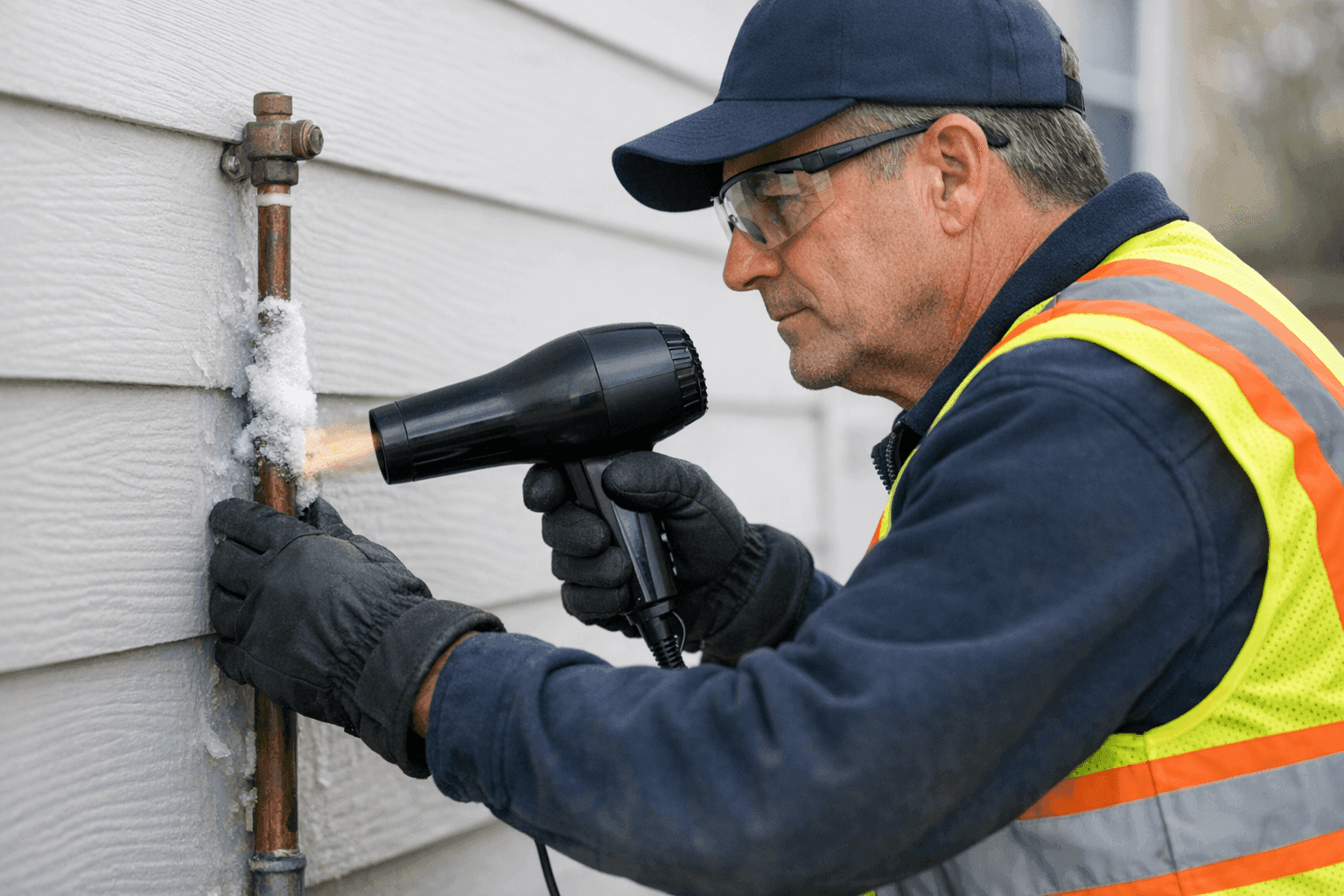
- Hair dryer: Your best friend for gentle, direct heat. Start at the faucet end and work toward the frozen section.
- Warm towels: Soak towels in hot water and wrap them around the pipe. Replace as they cool.
- Portable space heater: Place it in the room, never directly against the pipe.
- Heating pad: Set to medium and wrap around the frozen section.
- Plastic bucket or pan: Catch drips as ice melts.
Never use anything with an open flame—more on that in a moment.
What Not to Do 🔥
It’s tempting to grab the nearest heat source when you’re stressed. But some methods are more dangerous than the freeze itself:
- No blowtorches, propane heaters, or lighters. Open flames can crack pipes, start fires, or release toxic fumes.
- Don’t use boiling water. Extreme temperature changes can shatter pipes, especially older ones.
- Never bang on pipes. Hitting them can cause hidden cracks or breakage.
- Don’t leave electrical devices unattended. Always monitor hair dryers or heaters.
According to the National Fire Protection Association, heating equipment is a leading cause of home fires in winter. Take it slow and steady.
Step-by-Step: How to Thaw a Frozen Pipe
- Open the faucet nearest the frozen section—both hot and cold taps if possible.
- Apply gentle heat with a hair dryer or warm towels at the end closest to the faucet. Work toward the coldest part of the pipe.
- Move slowly along the pipe as ice melts. Patience saves headaches.
- Check for leaks as you go. If you spot one, shut off the water supply and call for help.
- Keep the faucet open until water pressure returns to normal.
If you’re dealing with a tricky spot—like inside a wall or crawlspace—professional help is your safest bet.
When Should You Call a Pro?
Some situations call for more than a DIY fix:
- If the frozen section isn’t accessible
- If you notice cracks, bulges, or water leaking
- If you can’t restore flow after 30–45 minutes of safe thawing
- If you’re uncomfortable tackling it yourself
A licensed plumber brings specialized tools and experience. Sometimes, safety means knowing when to pass the wrench.
What Pros Do On Arrival
When Peters Flo Plumbing arrives, we:
- Pinpoint the frozen section using thermal imaging or safe inspection methods
- Use professional-grade thawing equipment—never open flames
- Check for hidden damage or leaks once pipes thaw
- Inspect for any related issues, like potential Backflow Prevention
We’ll also help you figure out why the pipe froze in the first place, so you’re ready for next time.
Preventing Refreezing 🧣
Once your pipes are thawed, don’t let winter catch you off guard again. Here’s how to keep things flowing:
- Insulate exposed pipes—especially in basements, attics, and exterior walls
- Let faucets drip on especially cold nights to keep water moving
- Seal cracks and gaps in walls or foundations near pipes
- Open cabinet doors under sinks to let warm air circulate
- Keep the thermostat steady—don’t drop it at night
According to the International Residential Code, proper insulation and preventative maintenance are key to avoiding future freezes.
Common Mistakes to Avoid
Every winter, homeowners make the same mistakes that lead to bigger problems:
- Ignoring early warning signs
- Using unsafe heating methods
- Waiting too long to act
- Forgetting to check pipes in rarely used spaces
Stay alert. A little attention now saves a lot of trouble (and money) later.
DIY vs. Professional Help
Not every frozen pipe requires a call to the cavalry. But know your limits:
- DIY is fine for accessible, small freezes with no visible damage.
- Call a plumber if you suspect burst pipes, can’t reach the freeze, or water doesn’t return.
A good rule of thumb: If you’d hesitate to fix your car’s brakes, don’t gamble with your plumbing.
Timeline & Disruption
Thawing a pipe can take anywhere from 30 minutes to several hours, depending on:
- Pipe material and thickness
- How long the pipe’s been frozen
- The ambient temperature
Plan for some disruption—move pets and kids out of the area, and keep towels handy for leaks.
Materials and Equipment Checklist
Before you start, grab:
- Hair dryer
- Extension cord (for hard-to-reach pipes)
- Warm towels
- Space heater (if the room is cold)
- Bucket or pan for drips
- Flashlight
Preparation keeps you a step ahead.
Seasonal Considerations
Pipes freeze fastest when:
- Outdoor temps dip below 20°F (-6°C)
- Sudden cold snaps hit unprepared homes
- Wind chills blast through cracks and gaps
If you live in an older home or one with little insulation, be extra vigilant.
Frequently Asked Questions
Can I use salt or hot water to melt ice in pipes?
No. Salt lowers the freezing point but isn’t a safe or effective thawing method for pipes. Boiling water can crack them.
Should I shut off my water if I’m away during winter?
Yes. Turn off the main valve and drain your system to avoid surprises.
How do I know if I have a burst pipe?
Water pooling, dripping sounds, or new stains on walls/ceilings are warnings. Shut off water and get help.
Costs & Time Factors
DIY thawing is usually free—just your time and effort. But if a pipe bursts, repairs can run into the thousands. That’s why early action matters.
For larger jobs, our East Orange plumbing team can help if you need quick, reliable pipe repair or emergency plumbing.
Prevention & Maintenance
The best way to handle frozen pipes? Stop them before they start:
- Schedule annual backflow-prevention maintenance
- Insulate pipes before winter sets in
- Check for leaks and cracks each fall
Small investments now pay off when winter bites.
Final Thoughts: Handle Frozen Pipes with Confidence
Frozen pipes are a winter headache, but you’re not powerless. With a calm approach and the right tools, you can thaw pipes safely and keep your home dry. If things look dicey, Peters Flo Plumbing is here—day or night.
Call Peters Flo Plumbing now — or reach us anytime at 877-331-9687 .