How to Prevent Mold and Water Damage from Plumbing Leaks
Is there a faint musty smell in your home? A quiet drip behind a wall? You might not see it at first. But a leaking pipe can start a chain reaction—one that ends with mold, ruined walls, and costly repairs.
At Peters Flo Plumbing, we’ve seen even small leaks cause big headaches. The good news: you don’t have to wait for disaster to strike. With the right steps, you can keep your house dry, safe, and fresh.
How Leaks Cause Mold
Water is sneaky. It slips through the tiniest cracks, soaking into wood, drywall, and carpet. Once moisture lingers, mold can start to grow in just 24 to 48 hours. That’s faster than bread goes stale on your counter.
Mold loves darkness and dampness—the very places hidden leaks create. Under sinks, behind toilets, in the basement corner. The spores, invisible to the eye, float through your home. They land. They thrive.
Unchecked, mold doesn’t just stain. It can eat through drywall, warp floors, and trigger allergies or breathing problems. The CDC warns that people with asthma or weakened immune systems are especially at risk.
Early Warning Signs to Watch For 🧐
Think of your house like a living system. It gives signals—some loud, some subtle—when something’s wrong. Spotting these early could save you thousands:
- Musty odors: If a room smells earthy or damp, check for leaks nearby.
- Discolored patches: Stains on ceilings or walls often point to slow leaks.
- Peeling paint or wallpaper: Moisture behind the surface makes paint bubble or peel.
- Warped wood: Swollen baseboards or buckling floors mean water is at work.
- Visible mold: Tiny black or green spots, especially in corners or near plumbing fixtures.
- Sudden spike in water bills: A hidden leak wastes water—even if you can’t see it.
If you notice any of these, don’t wait. Water damage and mold can move quickly.
Immediate Actions When You Find a Leak
Found a leak? Act fast—minutes matter. Picture it like a race against the clock.
- Shut off the water supply. Know where your home’s main shutoff valve is. Turn it clockwise to stop water immediately.
- Contain the water. Use towels, buckets, or a wet/dry vacuum to soak up standing water.
- Open windows and doors. Airflow slows moisture and gives you time before mold sets in.
- Move belongings. Take furniture, rugs, and valuables out of the wet area.
- Call a licensed plumber. Professional help is key for repairs and for finding the leak’s source.
How to Spot Hidden Moisture
Not all leaks announce themselves with puddles. Some lurk behind walls or under floors, slowly causing damage.
Here’s how to play detective:
- Feel for cool spots. Wet drywall or wood often feels colder than dry areas.
- Check with a flashlight. Shine light along baseboards and under sinks for glistening spots.
- Listen. Sometimes you’ll hear a faint trickle or drip behind walls.
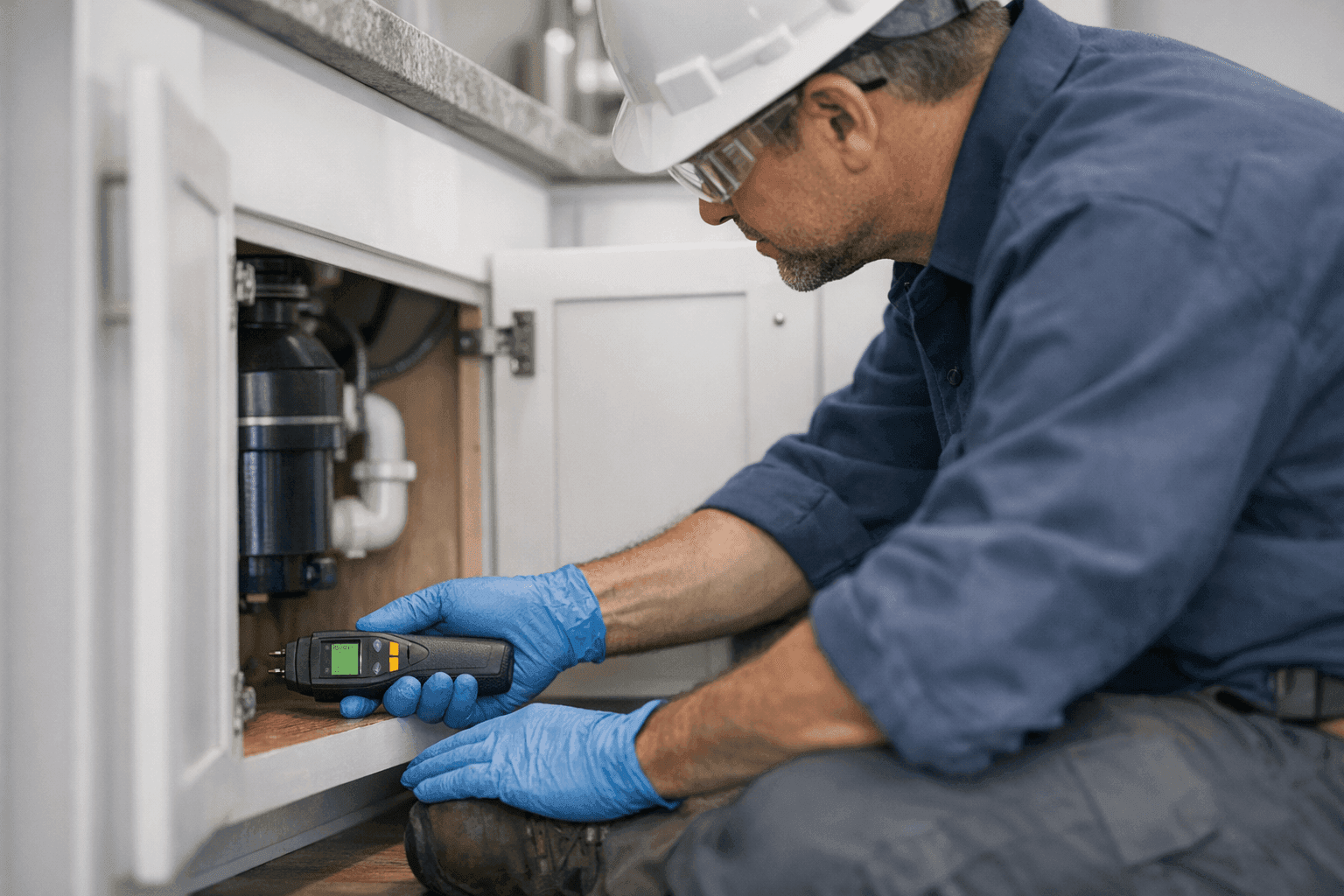
- Use a moisture meter. Hardware stores sell these handy tools. They measure dampness in walls and floors.
If you suspect a hidden leak, it’s time to bring in the pros. Tools like thermal imaging cameras can pinpoint moisture without tearing up your home.
Moisture Control Strategies for Every Home
Think of mold as a weed. It needs water to grow. Cut off its supply, and it can’t take root. Here’s how:
- Fix leaks promptly. Even a slow drip is enough to fuel mold.
- Ventilate bathrooms and kitchens. Use exhaust fans or open windows when showering or cooking.
- Run a dehumidifier in damp areas. Basements and laundry rooms benefit most.
- Store items off the floor. Especially in basements—use shelves to keep boxes dry.
- Insulate pipes. Prevent condensation and sweating, especially in cold weather.
- Maintain your plumbing. Schedule annual checks for peace of mind.
Quick Safety Checklist
Before you grab a wrench or climb under a sink, keep these safety reminders in mind:
- Turn off electricity in the affected area if water is near outlets or wiring.
- Wear gloves and a mask if you’re handling moldy materials.
- Don’t use bleach on porous surfaces. It doesn’t always kill mold roots.
- Call a professional if you’re unsure about the leak’s source or extent.
When DIY Isn’t Enough: Call for Help
It’s tempting to tackle leaks with a quick patch. Sometimes, though, the problem runs deeper. Pipes corrode, joints fail, or the source isn’t where you think.
If your quick fix doesn’t hold—or if water keeps reappearing—don’t go it alone. Plumbing professionals use tools like Backflow Prevention to keep your water supply clean and your home safe from hidden contamination.
What Pros Do When They Arrive
A licensed plumber does more than patch holes. Here’s what you can expect:
- Thorough inspection: Using moisture meters, cameras, and years of experience, pros track leaks to their source.
- Code-compliant repairs: All fixes follow local plumbing codes and best safety practices (see the International Plumbing Code and EPA water safety standards).
- Dry-out advice: Tips for drying affected areas and preventing future moisture.
- Documentation: Photos and notes that may help with insurance claims.
Prevention Tips for Lasting Protection 🛠️
An ounce of prevention is worth a pound of drywall. Here’s how to stay ahead of leaks:
- Inspect fixtures monthly: Look under sinks, behind toilets, and around water heaters for any drips.
- Test your sump pump: Especially before rainy season—pour water in the pit and make sure it runs.
- Schedule annual plumbing maintenance: Catch problems early, before they become emergencies.
- Install water alarms: These gadgets beep when they sense moisture—perfect for basements or laundry rooms.
- Upgrade to braided hoses: For washing machines and dishwashers, swap out old rubber hoses for steel-braided ones.
The Cost of Waiting
Delaying repairs can turn a $100 fix into a $5,000 renovation. Mold remediation, ruined flooring, and damaged furniture all add up. Insurance may cover some costs, but not if damage results from neglect.
The sooner you act, the less you’ll spend.
When It’s a Plumbing Emergency
Some leaks can’t wait. It’s an emergency if:
- Water is gushing or pouring from a broken pipe.
- A fixture or toilet is overflowing and won’t stop.
- There’s water near your electrical panel or outlets.
- You smell gas (leave the house and call emergency services).
In these moments, speed is safety. Don’t hesitate—call for help right away.
Seasonal Considerations for Plumbing Leaks
Winter, spring, summer, fall—each season brings its own risks:
- Winter: Frozen pipes can burst. Keep heat at 55°F or higher, even if you’re away.
- Spring: Heavy rains test your sump pump and basement drains.
- Summer: High humidity increases condensation and mold risk.
- Fall: Falling leaves can clog outdoor drains and gutters.
A little seasonal prep goes a long way.
Common Mistakes Homeowners Make
We get it—everyone’s busy. But some mistakes make leaks and water damage worse:
- Ignoring small leaks: Even slow drips grow into big problems.
- Using too much caulk: It hides issues, but doesn’t fix them.
- Delaying maintenance: Out of sight isn’t out of mind—until it’s too late.
- Forgetting about backflow prevention: A single event can let contaminated water into your home. Learn more about Backflow Prevention.
Timeline: From Leak to Mold
- Within minutes: Water spreads into carpets and walls.
- Within hours: Wood swells, drywall softens.
- 24-48 hours: Mold begins to grow.
- Days to weeks: Structural damage and musty odors set in.
Acting quickly truly changes the outcome.
Materials and Equipment That Help Prevent Leaks
- Quality plumbing fixtures: Invest in reliable brands to reduce the risk of failure.
- Water shutoff valves: Make sure they’re accessible and tested regularly.
- Water alarms: Place them in basements, under sinks, and near water heaters.
FAQ: Answers to Common Questions
How do I know if I have a hidden leak?
Watch for signs like unexplained water bills, musty odors, or stains on walls and ceilings.
Can I remove mold myself?
Small patches can be cleaned with detergent and water. For larger areas, especially over 10 square feet (EPA guideline), call a professional.
What’s the best way to prevent leaks?
Routine checks, quick repairs, and regular plumbing maintenance keep leaks at bay.
Is backflow a risk for my home?
Yes, especially if you have irrigation systems or live in older homes. Backflow Prevention helps keep your water supply clean.
Don’t Wait—Keep Your Home Healthy
Every home deserves to be safe, dry, and mold-free. At Peters Flo Plumbing, we help homeowners find and fix leaks before they become disasters. Whether you need fast repairs, backflow prevention, or a full plumbing checkup, we’re ready to help.
If you’re looking for reliable plumbing in your area, check out our Iowa City plumbing services for help with everything from leaks to water heater repairs.
Call Peters Flo Plumbing now — or reach us anytime at 877-331-9687 .