How to Maintain Your Home’s Water Pressure
Is your shower losing its power? Faucets sputtering, or toilets filling slowly? You're not alone—water pressure problems sneak up on even the most careful homeowners. At Peters Flo Plumbing, we know how disruptive pressure swings can be. The good news? With a little know-how and a few simple steps, you can keep your home’s water flow just right and avoid costly headaches down the line.
Ignoring water pressure isn’t just a comfort issue. It can lead to burst pipes, leaky fixtures, and even backflow problems that threaten your family’s health. Let’s walk through what you need to know to keep everything running smoothly.
Optimal Pressure Range: What’s “Just Right”?
Think of water pressure like the Goldilocks rule. Too little, and daily tasks drag on. Too much, and your pipes and appliances take a beating. For most homes, the sweet spot is between 40 and 60 psi (pounds per square inch).
- Below 40 psi: Showers feel weak. Appliances may not run efficiently.
- Over 80 psi: Plumbing components are at risk. You might even void appliance warranties.
According to the International Association of Plumbing and Mechanical Officials (IAPMO), maintaining this range keeps your system healthy. It’s not just about comfort—it's about protecting your investment.
Why Does Water Pressure Fluctuate? 🚰
Water pressure can rise and fall for all sorts of reasons, some obvious and some hidden behind your walls.
- Municipal supply changes: Cities sometimes adjust pressure overnight.
- Aging pipes: Rust, mineral buildup, or old materials restrict flow.
- Pressure regulators malfunction: These devices wear out over time.
- Leaks: Even a tiny leak diverts pressure.
- Clogged fixtures or aerators: Hard water minerals love to gather here.
- Backflow incidents: Contaminated water can flow backward, causing sudden drops.
Knowing the cause is half the battle. It helps you respond quickly and avoid damage.
Quick Safety Checklist Before You Start
Before checking or adjusting anything, keep these basics in mind:
- Shut off water if making changes.
- Wear gloves and eye protection if you’ll be near plumbing connections.
- Never force valves or fixtures. If it doesn’t move, don’t push.
- If you suspect a gas line issue, leave the house and call a professional immediately.
When in doubt, call Peters Flo Plumbing. Safety first—every time.
How to Check Your Home’s Water Pressure
You don’t need fancy tools. A simple water pressure gauge (available at hardware stores) is all it takes.
- Choose a faucet close to your main supply—usually an outdoor tap.
- Turn off all water-using appliances.
- Attach the gauge and open the faucet fully.
- Read the number—that’s your current pressure.
If you see readings outside the 40–60 psi range, it’s time to act.
Pressure Regulators: The Unsung Heroes
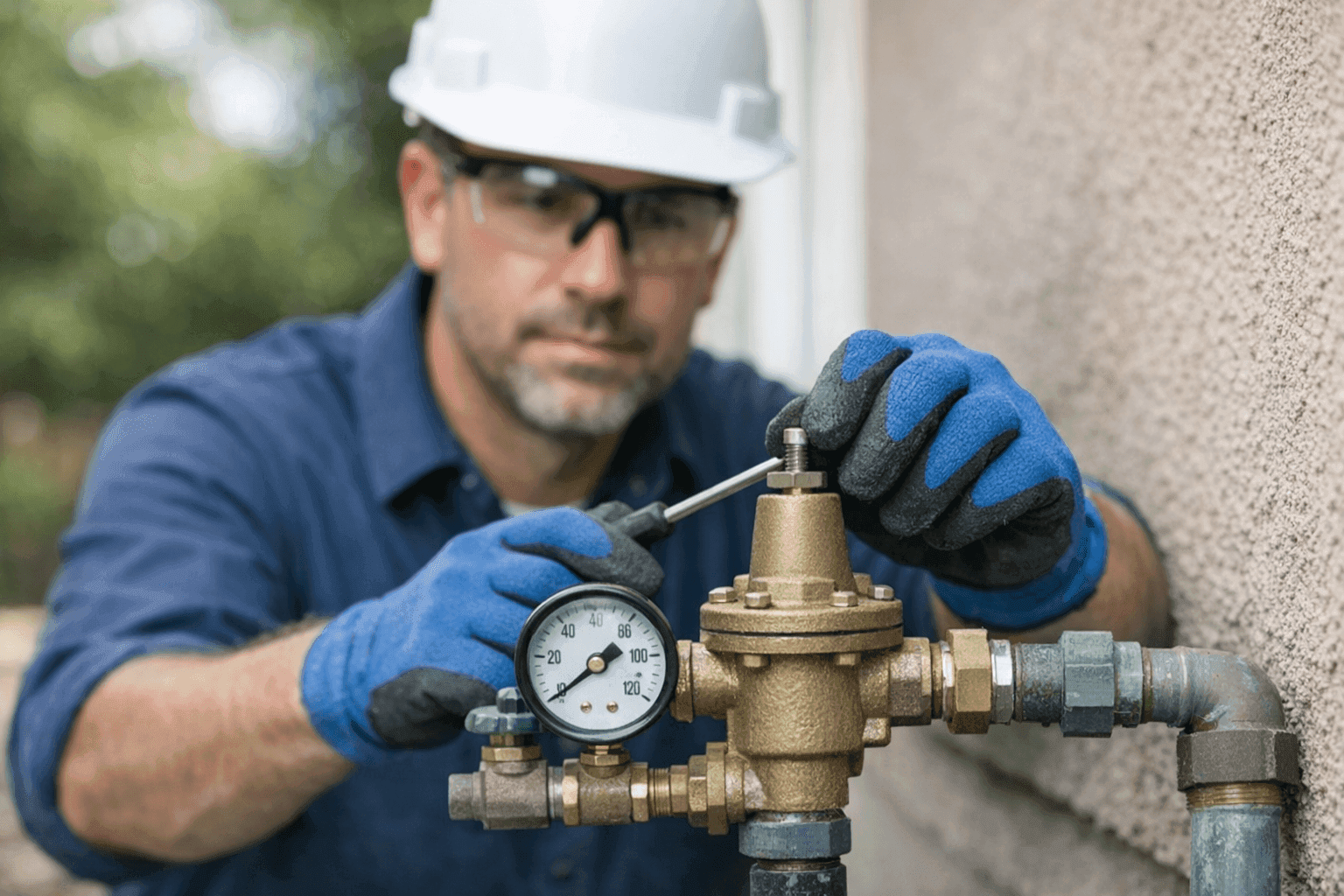
Pressure regulators (sometimes called PRVs) act like dimmer switches for your water flow. They keep pressure from getting dangerously high. Most homes have one near the main shutoff valve.
- If your pressure is too high, the regulator may need adjusting or replacing.
- If you don’t have one at all, consider installing one for peace of mind.
Consult your local plumbing code or the Uniform Plumbing Code (UPC) for installation guidelines. Don’t feel comfortable tackling it? Find Backflow Prevention with Peters Flo Plumbing.
Common Signs of Trouble
Spotting the problem early can save you a bundle. Watch for:
- Sudden drops: If pressure falls in one area, check for leaks or clogs.
- Banging pipes: Also called water hammer, this often means pressure is too high.
- Dripping faucets or running toilets: Fix these quickly—they waste water and lower pressure.
- Dirty or rusty water: Indicates corrosion or a break in the line.
A stitch in time saves nine, especially with plumbing.
DIY Maintenance Tips to Keep Pressure Steady 🛠️
You don’t need to be a plumber to keep your home’s water flowing smoothly. Here’s how:
- Clean aerators and showerheads every few months. Hard water can clog them fast.
- Inspect visible pipes for leaks. Even a slow drip adds up.
- Flush your water heater yearly to remove sediment that can block flow.
- Check and adjust your pressure regulator if you’re comfortable doing so.
- Install water filtration if you have mineral-heavy water—sediment can clog lines.
- Schedule annual Leak Detection to catch hidden issues early.
Stay proactive. Prevention is always easier than repair.
When to Get Professional Help
Some jobs are best left to the pros. Call Peters Flo Plumbing if:
- Pressure is under 40 psi or above 80 psi and you can’t adjust it.
- Multiple fixtures lose pressure at once.
- You hear constant banging or whistling in pipes.
- There’s a sudden spike in your water bill.
- You suspect a main line or backflow problem.
We know where to look and how to fix it safely.
What to Expect When a Plumber Arrives
When you call Peters Flo Plumbing, here’s what happens next:
- Pressure testing: We’ll measure and monitor your system.
- Inspection: We check regulators, main shutoff, and visible lines.
- Backflow testing: Ensures your drinking water stays safe.
- Tailored solutions: Whether it’s a quick fix or a new regulator, we’ll explain every step.
No surprises, just honest answers.
Backflow Prevention: Protect Your Family’s Health
Backflow happens when water flows the wrong way, pulling contaminants into your drinking water. Pressure changes are a common trigger.
- Backflow prevention devices are required by building codes in most areas.
- Annual testing ensures these devices work when you need them.
If you’ve never had your backflow devices checked, now’s the time. Learn more about Backflow Prevention near you with Peters Flo Plumbing.
Costs and Time Factors
Water pressure fixes range from simple (cleaning an aerator) to more involved (regulator replacement or leak repair). Most minor issues can be resolved in under an hour. Larger problems, like pipe replacement, may take a day or two.
- Pressure gauge: $10–$30
- Aerator cleaning: Free with vinegar and a toothbrush
- Regulator replacement: Varies by home; contact us for an estimate
Investing a little now prevents big surprises later.
When Is It an Emergency?
Not every pressure dip is a crisis. But call for immediate help if you notice:
- Flooding or major leaks
- No water at all
- Water flowing backward at fixtures
These can cause expensive water damage and health risks. Don’t wait—get help right away.
Seasonal Considerations: Pressure Through the Year 🌡️
Pressure can change with the seasons:
- Winter: Freezing pipes restrict flow. Insulate exposed pipes to avoid bursts.
- Spring/Summer: Municipal repairs or demand spikes may cause shifts. Monitor your pressure monthly.
- After storms: Heavy rain can stress sewer lines. Keep an eye out for slow drains or backflow.
A little vigilance goes a long way.
Common Mistakes Homeowners Make
It’s easy to overlook small warning signs. Here’s what to avoid:
- Ignoring slow leaks or drips
- Using harsh chemicals to clear clogs (they can eat pipes!)
- Forgetting to test water pressure annually
- Skipping backflow testing
Stay ahead of problems with simple, regular checks.
Timeline & Disruption: What to Expect
Most pressure fixes are quick and cause minimal disruption. We work swiftly and cleanly—your comfort matters to us.
- Simple fixes: 30–60 minutes
- Major repairs: 1–2 days, sometimes less
- No-mess approach: We protect your floors and clean up after ourselves
You’ll be back to normal in no time.
Materials & Equipment: What You’ll Need
For DIY checks:
- Water pressure gauge
- Adjustable wrench
- Bucket and towels (just in case)
- Vinegar and brush (for cleaning)
For anything beyond this, a trained plumber brings the right gear.
Frequently Asked Questions
How often should I test my water pressure?
Once a year is a good rule of thumb, or anytime you notice changes in flow.
Is high water pressure really dangerous?
Yes—over time, it can burst pipes, damage appliances, and cause leaks.
Can I fix a pressure regulator myself?
Adjustment is often possible, but installation and major repairs call for a licensed plumber.
What if I have both low and high pressure at different times?
This signals a bigger issue—call for a full inspection.
Where can I get help with plumbing near me?
Our team handles all residential plumbing needs. For reliable plumbing in Lakewood, see our Lakewood plumbing services.
Water pressure issues don’t have to steal your comfort or peace of mind. With regular checks and care, your plumbing can last for decades. Need a hand? Call Peters Flo Plumbing now — or reach us anytime at 877-331-9687 .